
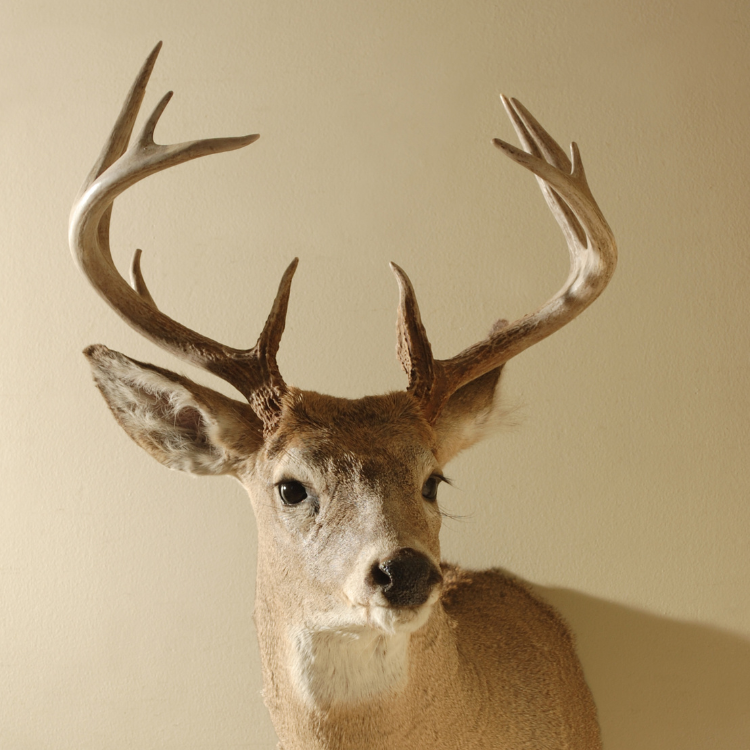
Cold winter months can be as tough on taxidermy as extreme heat, so proper care is crucial. Maintaining consistent indoor temperatures and balanced humidity helps protect taxidermy animals from drying out or becoming brittle. Avoid placing mounts near fireplaces, heating vents, or drafty areas, as sudden temperature changes can lead to long-term damage.
Common winter issues include cracking and fading, especially in deer mounts. Exposure to sunlight and dry indoor air can cause hides to lose moisture and color. Use blinds, UV-protective windows, and a humidifier to preserve natural textures and lifelike detail.
Winter also brings hidden risks, such as insect damage, even when pests seem less active. Dust buildup can attract insects that may damage hair, like in deer and wild boars; feathers, like in falcons and other birds; and even cause damage to the fins of taxidermy fish. Regular light dusting and routine inspections help catch potential issues early before they turn into costly repairs.
If storing mounts during winter, prepare carefully. Store fishing taxidermy and other mounts in clean, dry, climate-controlled spaces, avoiding basements or garages with moisture fluctuation. Never wrap mounts in plastic—use breathable materials to prevent moisture and maintain condition.
With proper care, your taxidermy remains a lasting display of craftsmanship and a repository of memories. Taking a few simple steps in winter protects your mounts from avoidable damage. For help with care, storage, or restoration, Tim Knights' Taxidermy ensures your pieces get the quality they deserve.