
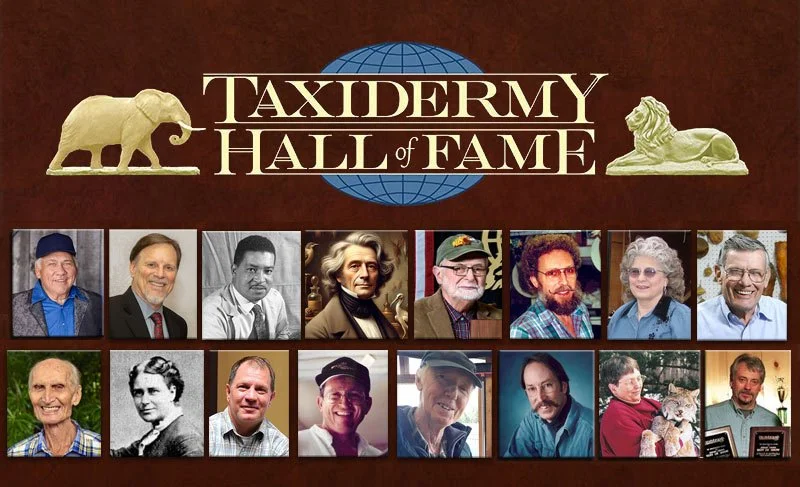
When most people hear the words "Hall of Fame," they probably think of sports, music, or other famous professions. But did you know there is also a Taxidermy Hall of Fame? Established in 1974, the Taxidermy Hall of Fame was created to recognize the people who have made outstanding contributions to the art and profession of taxidermy. It honors the pioneers, innovators, artists, educators, and professionals whose work has helped shape taxidermy throughout history.
The story of the Taxidermy Hall of Fame actually goes back more than 50 years. During a National Taxidermists Association convention in 1974, the idea was introduced to create a place that would recognize noteworthy taxidermists and preserve the history of the profession. The original vision was a physical museum filled with impressive examples of taxidermy and displays honoring the people who helped advance the craft. Over the years, the organization went through several changes, eventually becoming an independent nonprofit known simply as the Taxidermy Hall of Fame.
So, how does someone make it into the Taxidermy Hall of Fame? It is not simply about being a great taxidermist or winning a competition. The Hall of Fame looks for people who have made significant contributions to the profession and helped advance the art of taxidermy. Today, nominations go through a selection process involving a committee before finalists are considered by the Executive Committee. The Hall of Fame also recognizes both historical figures and contemporary contributors. Historical inductees are people whose major contributions occurred at least 50 years before their nomination, while contemporary inductees represent more recent contributions to the profession.
And the list of inductees is filled with some fascinating names from the history of taxidermy. The Hall of Fame recognizes people from different generations and parts of the world, including legendary figures such as Carl E. Akeley, William T. Hornaday, and Herman H. ter Meer. It has also recognized people whose contributions went beyond creating finished mounts, including educators, innovators, sculptors, tanning specialists, competition judges, and people who helped advance the profession for future generations. The 2023 class, for example, included historical inductees Jane Catharine Tost and Will Richard, along with contemporary inductees Rod Connelly and Rodney Schreurs.
Today, the Taxidermy Hall of Fame operates primarily as a virtual museum and historical resource, giving people an opportunity to learn about the individuals, techniques, achievements, and history behind the profession. Its mission is not simply to celebrate taxidermists, but to preserve the heritage of taxidermy and educate people about the art itself. For professionals like us at Tim Knight's Taxidermy, that history is a reminder that taxidermy is about much more than mounting an animal. It is a craft that combines knowledge of anatomy, artistry, patience, and attention to detail, with generations of professionals continuing to push the craft forward.